
The Meaning of DC and RMS on Active Probes
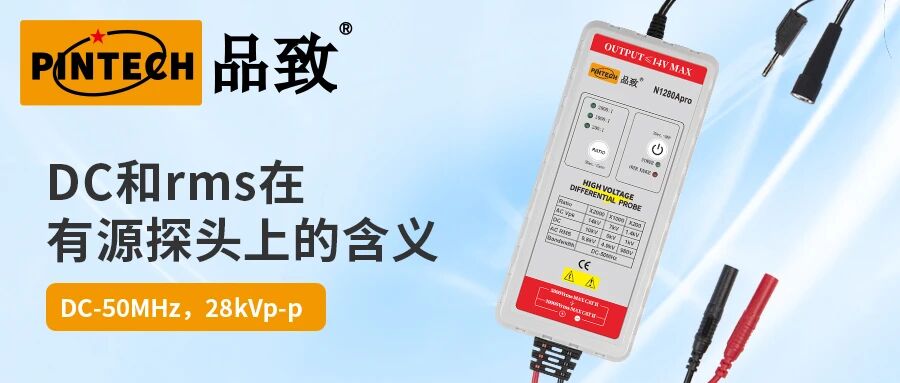
The DC range (e.g., ±1000V) indicates the range of DC voltage that the probe can measure stably and accurately. Regardless of whether the DC voltage is positive or negative, as long as it falls within this range, the probe will function normally and accurately capture and output the precise amplitude of the DC signal.
RMS refers to the effective value of a pure sine wave. For example, 700 Vrms indicates that the probe can measure a sine wave with an effective value of 700V. Based on the characteristics of a sine wave, the peak voltage= √2 × RMS. Taking 700 Vrms as an example, its corresponding peak voltage is √2 × 700 V ≈ 1000 V. This means that when measuring a sine wave, the peak voltage this probe can withstand must not exceed ±1000 V.
From the above analysis, it can be seen that both the 1000 VDC and 700 Vrms probes represent the same peak withstand voltage capability of ±1000 V. The difference in their rated values and the reason why RMS < DC is that: RMS is calculated based on RMS of a sine wave, while DC is the directly labeled DC voltage range. At the peak level, both achieve uniformity.
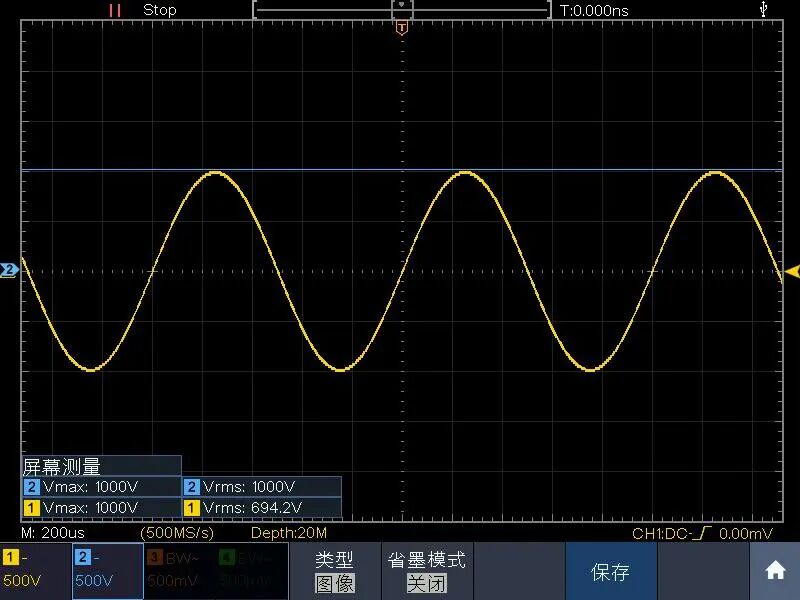
●Clearly identify the signal type: Before using an active voltage probe, determine whether the measured signal is DC or sinusoidal AC. For DC signals, refer to the probe's DC rating; for sinusoidal AC signals, according to the RMS rating.
●Avoid exceeding peak limits: Whether measuring DC signals or sinusoidal AC signals, ensure that the signal peak doesn't exceed the probe's maximum allowable peak (e.g., ±1000V in the example above), otherwise the probe may be damaged.
●Special Considerations for Non-Sinusoidal Waves: The RMS parameter refers to pure sine waves. When measuring non-sinusoidal AC signals, the RMS range can't be directly applied to determine probe suitability. A comprehensive evaluation must be conducted, incorporating parameters such as signal peak values. Consult the probe manufacturer or refer to detailed technical manuals when necessary.
●Follow safety regulations: When measuring high-voltage signals, strictly adhere to relevant safety regulations to ensure the safety of personnel and equipment. Don't rely solely on the probe's parameter range while neglecting safety precautions.